
What are the differences between coconut shell activated carbon and other types of activated carbon?
Coconut shell activated carbon is a very common type of activated carbon. Due to its high wear resistance, well-developed pore structure, high adsorption strength, easy regeneration, economic and durable properties, it is widely used in various industries such as industry, water purification, and oil refining. So, compared with other ordinary activated carbon, what are the differences between coconut shell activated carbon?
1. Differences in material
Coconut shell activated carbon is made from natural high-quality coconut shells, which are activated through high-temperature treatment and then refined and screened. After being ground, the strength of coconut shell activated carbon reaches 99%.
Ordinary activated carbon is made from shells or wood chips, or from coal to produce coal-based activated carbon.
2. Differences in appearance
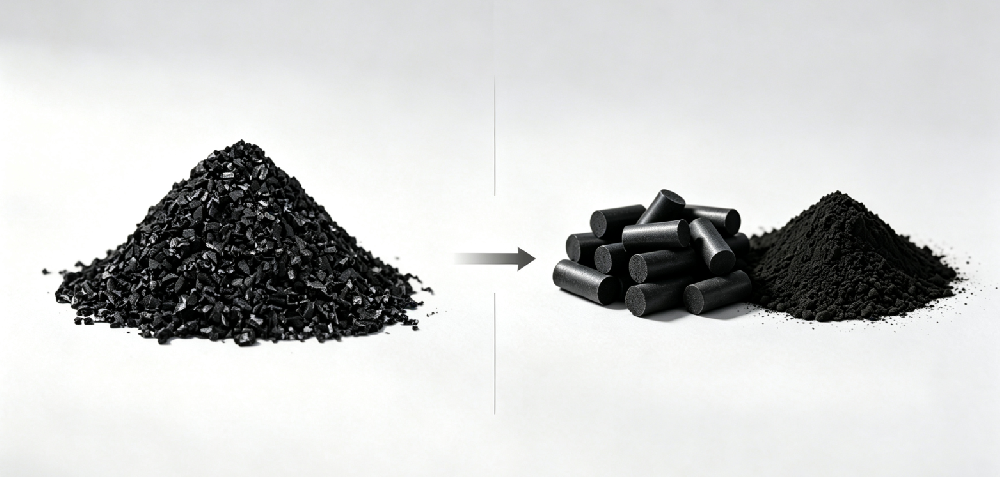
The appearance of coconut shell activated carbon is black, non-crystalline granular particles with well-developed pores and high strength and strong adsorption capacity. Common particle sizes: 4-8, 5-10, 6-12, 10-28, 8-30, 12-30, 20-50 mesh.
The appearance of ordinary activated carbon varies. There is powdered activated carbon in powder form, or column-shaped activated carbon processed by adding binders, and there is also coconut shell activated carbon in the form of non-crystalline black granules.
3. Price differences
Coconut shell activated carbon is made from high-quality coconut shells. Due to the origin of the coconut shells, the cost of the raw materials is relatively high, which results in the price of coconut shell activated carbon being higher than that of other conventional activated carbons.
· Fujian Guangyuan Carbon Products Co.,Ltd.